Capsule Elevators in India: A Guide for Construction
An architect specifies a capsule elevator for a hotel atrium. It looks stunning in the render. But the structural consultant gets involved three months into construction and flags a problem: the shaft position runs straight into a primary beam, the façade cladding schedule was finalized before elevator interfaces got confirmed, and nobody budgeted for the steel structure needed to support an exterior glass capsule through wind and seismic loads. The elevator gets redesigned twice, the opening gets delayed by ten weeks, and the final installation ends up slightly off-center from what the render promised.
This is the most common way capsule elevator projects go wrong in India—not because of equipment quality, but because the capsule gets treated as an interior design decision rather than a construction coordination challenge. The glass, the panoramic views, and the visual drama come from engineering decisions that must be locked in during schematic design, not after civil work has started.
This guide covers what construction teams, developers, and PMCs need to know before breaking ground: when capsule elevators make sense, what structural and civil work they actually require, how to sequence installation, and what maintenance reality looks like once the building is handed over.
Understanding capsule elevators in India
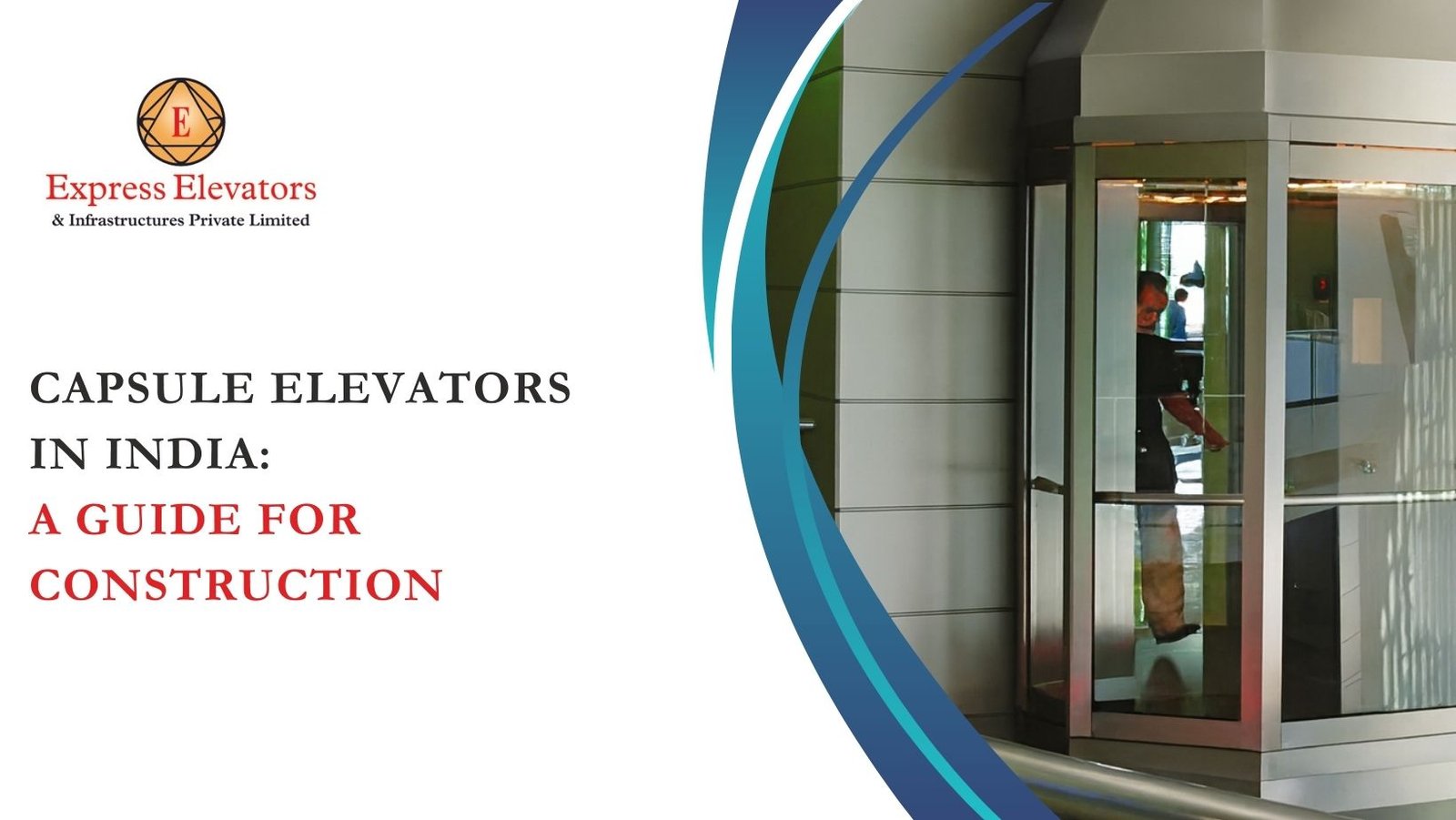
A capsule elevator is a passenger lift with a transparent cabin—glass walls, stainless steel framing, and full or partial visibility of the car during travel. The transparency is the product. Everything else—the drive system, safety devices, door operators—works identically to a standard passenger elevator underneath the glass.
In India, capsule elevators appear most often in hotels, shopping malls, IT parks, luxury residential towers, hospitals with atrium layouts, and mixed-use developments where the circulation core doubles as an architectural feature. The common thread: these are buildings where movement is meant to be seen, not hidden.
From a builder’s perspective, capsule elevators differ from standard lifts in three ways: higher structural support requirements, more complex shaft-and-façade coordination, and roughly 35-50% higher equipment cost for equivalent passenger capacity.
When capsule elevators make sense in a project
The right use cases involve buildings where the lift’s visibility adds measurable value—not just aesthetic appeal, but commercial or functional return.
Strong fits:
- Hotel lobbies and atriums where guest experience directly affects reviews and revenue
- Malls where visible vertical circulation draws footfall to upper levels
- Premium residential towers where the capsule is a sales-stage differentiator
- Exterior façade installations that form part of the building’s identity from the street
Poor fits:
- Tight urban sites with no meaningful sightlines to exploit
- Purely utilitarian circulation cores where visibility adds no value
- Budget-constrained projects where the 35-50% equipment premium can’t be justified against return
The uncomfortable truth: many Indian projects specify capsule elevators because a competitor’s building has one, not because the site layout or business case supports it. That decision usually surfaces as a structural problem during detailed design.
Structural and civil requirements
This is where most capsule elevator problems originate in Indian construction. The shaft is not just a container—it’s a load-bearing element that needs to be designed for the elevator’s weight, dynamic forces, and wind loads if it’s exterior-mounted.
Shaft options and support points
Three structural approaches are common in India:
- RCC core shaft: Standard for internal atrium capsules. Cheaper, easier to waterproof, but limits glass visibility to the cabin itself rather than the full travel path.
- Steel frame structure: Typical for exterior and semi-exposed capsules. Allows full transparency but requires structural engineering for wind, seismic, and bracket loads.
- Hybrid framing: RCC base with steel superstructure above a certain height. Used when the lower floors need fire protection while upper floors prioritize transparency.
Exterior capsules in India need weatherproofing and drainage provisions that interior installations don’t. Monsoon-season water management—shaft sealing, glass seal durability, sill drainage—needs to be part of the structural drawing package, not an afterthought.
Pit depth ranges from 900-1,500mm depending on drive system; overhead clearance requirements run from 3,500-4,500mm. Both dimensions need to be confirmed with the elevator supplier before the structural drawings get issued for construction.
Sizing, capacity, and space planning
Shaft size determines cabin size—not the other way around. This sequence matters because projects regularly get the relationship backwards, specifying a cabin and assuming the shaft will follow.
Typical Indian capsule elevator capacity bands:
- 4-6 persons (320-450 kg): Shaft internal minimum approximately 1,600mm × 1,600mm; suits residential and small commercial
- 8-10 persons (544-680 kg): Shaft internal minimum approximately 1,800mm × 1,800mm; standard for hospitality and commercial
- 13+ persons (870-1,000+ kg): Shaft 2,000mm × 2,000mm or larger; high-traffic public buildings
Add 400-600mm to shaft internal dimensions to get overall structural opening requirements, accounting for walls, brackets, and clearances. Also plan approach and waiting zones at each landing—a capsule elevator with no proper lobby space at ground floor creates queuing problems that undermine the visual experience.
Drive systems and technical choices
Traction systems suit most Indian capsule applications: quieter operation, better energy efficiency, and speeds from 1.0-2.5 m/s for buildings over four floors. Machine-room-less (MRL) traction configurations save rooftop space but require more overhead clearance and create access challenges during maintenance—relevant for buildings where roof space is already tight.
Hydraulic capsule systems work for 2-4 floor installations where moderate speed (0.5-1.0 m/s) is acceptable. The hydraulic cylinder can compromise visual clarity in fully transparent shafts, making hydraulic options more common in wall-backed semi-cylindrical designs.
Glass shafts amplify noise and vibration in ways that enclosed shafts don’t. Specify vibration isolation at guide rail brackets and acoustic treatment at machine mounting points. Buildings that skip this step end up with a visually impressive lift that generates complaints about mechanical noise in adjacent spaces.
Regenerative drives reduce energy consumption by 30-40% by feeding power back to the building grid during descent—worth specifying in high-traffic applications where the energy saving accumulates quickly.
MEP, safety, and compliance
Capsule elevators in India need the same statutory approvals as standard passenger lifts, plus additional documentation for the structural support system if exterior-mounted.
Key MEP and compliance items:
- Dedicated electrical supply circuit sized to the drive system’s kVA rating
- Earthing system independent of building general earthing
- ARD (Automatic Rescue Device) with battery backup for power-cut lowering
- CCTV inside the cabin for public buildings (required by some state authorities)
- Emergency communication system connecting to a monitored point
- Fire and smoke detection interfaces where the glass shaft connects to multiple floors
- Lift license applications vary by state—Maharashtra, Karnataka, Delhi, Tamil Nadu each have different liaisoning processes and timelines
Get state-specific approval requirements confirmed before issuing structural drawings. Retrofitting to meet an approval condition after construction costs significantly more than designing for compliance from the start.
Construction and installation sequencing
The coordination failure that kills capsule elevator timelines in India usually happens between the façade contractor and the elevator supplier. Both need confirmed interface dimensions before finalizing their shop drawings, and neither will issue drawings until the other confirms. Break this deadlock by making the elevator General Arrangement Drawing (GAD) the reference document that all other packages coordinate against.
Recommended sequence:
- Lock elevator model and obtain supplier GAD
- Issue GAD to structural consultant, façade contractor, and civil team
- Finalize shaft structural design based on confirmed loads and clearances
- Complete civil or steel frame construction including pit and overhead structure
- Façade cladding up to but not closing off elevator access zones
- Guide rail and drive system installation by elevator team
- Electrical connections, control panel, and safety devices
- Cabin assembly and glass panel installation
- Finishing, statutory testing, and approvals
Common on-site conflicts in India include beam positions that weren’t coordinated with guide rail locations, AC duct runs that cross overhead clearance zones, and staircase enclosures that block maintenance access to the hoistway. All three are preventable with a coordinated drawing review before construction starts.
Cost, maintenance, and lifecycle view
Equipment costs for capsule elevators in India run 35-50% higher than standard passenger lifts of equivalent capacity. Civil and structural costs vary more widely: an internal atrium capsule in an RCC shaft costs modestly more than a standard installation; an exterior steel-frame capsule on a hotel façade can cost 60-80% more in structural work alone before equipment is counted.
Maintenance requires provisions that standard elevator AMC schedules don’t include:
- Glass panel cleaning: quarterly for interior, monthly or more for exterior in dust-heavy or coastal Indian cities
- Seal inspection: annually for interior, semi-annually for exterior to catch weathering before water ingress damages electrical components
- Catwalks, safe access provisions, and cleaning equipment access points need to be designed into the building—not improvised post-handover
AMC contracts for capsule elevators in India should explicitly specify glass cleaning access, seal replacement intervals, and response time commitments for exterior installations where weather-related faults can occur at short notice.
FAQs
How early should the elevator supplier be brought into a construction project?
Bring the elevator supplier in during schematic design—before structural drawings are issued. The GAD from the supplier needs to inform beam positions, shaft openings, pit depths, and overhead clearance in the structural package. Engaging suppliers after civil design is complete consistently creates coordination problems that are expensive to resolve.
What structural system works best for exterior capsule elevators in India?
Steel frame structures suit most exterior applications because they allow full transparency and can be designed efficiently for wind and seismic loads. RCC is cheaper but limits glass visibility. In high-wind zones or buildings over 15 floors, the structural engineer should review dynamic load behavior of the glass shaft under wind—not just static loads.
Do capsule elevators need separate fire safety provisions in India?
Yes, in most cases. Glass shafts that span multiple floors create fire and smoke spread risks that enclosed shafts don’t. Smoke detection, automatic door interfacing with fire systems, and sometimes pressurization provisions are needed depending on building type and the applicable NBC or local fire department requirements.
How long does capsule elevator installation take once civil work is complete?
4-6 weeks for interior installations with pre-constructed shafts; 6-10 weeks for exterior capsules that include weatherproofing, façade tie-ins, and glazing work. Statutory approval timelines add 3-6 weeks in most Indian states after installation is complete.
Conclusion
Capsule elevators in India create real value when the construction case—not just the aesthetic case—justifies the investment. Structural coordination, correct sequencing, and early supplier involvement prevent the timeline and cost overruns that make these projects difficult. Projects that treat the capsule as a construction coordination challenge from day one deliver on the visual promise without the surprises.
If you’re planning a capsule elevator for a current project, start with a site-specific feasibility review before structural drawings are finalized.
Express Elevators provides early-stage design support for capsule elevator projects across India, supplying General Arrangement Drawings, structural load data, and interface specifications that architects, PMCs, and structural consultants need before construction drawings are issued.
We supply traction and hydraulic capsule elevator systems for internal atriums, exterior façades, and semi-exposed installations, and manage the complete coordination between civil, façade, and elevator installation scopes. Our handover packages include statutory approval documentation, maintenance manuals, and AMC programs designed specifically for glass capsule systems in Indian operating conditions.
Share your project brief—building type, number of stops, preferred shaft location, and construction stage—and we’ll come back with a GAD-based feasibility assessment and coordinated scope for your project.