
Benefits of a Capsule Lift at Home: Luxury and Elegance
Most home improvement projects add value on paper but change almost nothing about how a home looks or feels in daily life. A capsule lift is the exception. It’s one of the very few upgrades that simultaneously changes the architecture of a room, adds a functional amenity, and moves a property into a higher resale bracket—all without breaking a single load-bearing wall.
The glass tube design isn’t just decorative. It draws the eye upward, opens vertical sightlines, and creates an architectural centerpiece in otherwise ordinary living spaces. Homes with elevators in Indian cities earn 10-25% higher rent and sell faster than comparable properties without them. And unlike kitchen renovations or landscaping, a capsule lift serves the home permanently—it doesn’t go out of style, and it doesn’t wear down with age the way surface finishes do.
This guide covers every meaningful benefit: design impact, space efficiency, property value, daily convenience, energy performance, safety, and installation realities.
Capsule Lift Design
A capsule lift uses a self-supporting polycarbonate or tempered glass tube that rises through the home’s interior without requiring a masonry shaft. A turbine at the top generates pressure differential to move the cabin upward; controlled air release handles the descent using gravity. The entire structure anchors through floor slabs and stands independently without touching walls.
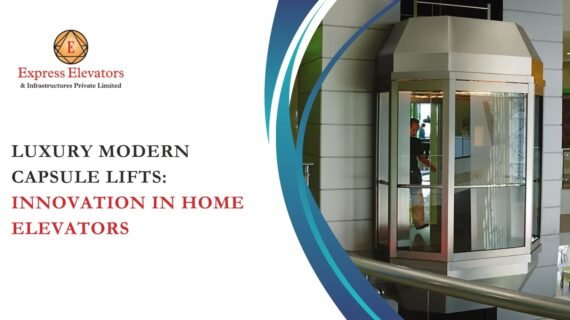
The cabin sits inside the tube with full 360-degree transparency. Tempered glass panels, customizable tints, and stainless steel accents give it the visual weight of a design installation rather than a mechanical fitting. It looks placed deliberately—not retrofitted grudgingly.
Aesthetic and Design Benefits
360-Degree Views and Interior Impact
The transparent cabin captures the home’s interior as it travels—staircases, garden views, artwork on walls. It doesn’t block light the way a conventional enclosed lift does. In homes with double-height living spaces or atrium staircases, it reads as an architectural element rather than added infrastructure.
Standard enclosed lifts add functionality but subtract visual openness. A capsule lift adds both. Visitors notice it immediately, and it anchors the design of the floor it sits on.
Customization Options
- Cabin finishes: clear, frosted, or tinted polycarbonate; tinted tempered glass
- Interior materials: leather seating, designer COP panels, LED mood lighting
- Tube colour and trim: chrome, brushed steel, matte black accents
- External surround: matching flooring inlays and ceiling collar finishes
These aren’t minor cosmetic choices—they determine whether the lift reads as a premium architectural element or simply as a glass cylinder in the corner of a room.
Space-Saving Advantages
The self-supporting structure takes up 30-43 inches in diameter. No pit excavation, no machine room, no dedicated masonry shaft. This makes capsule lifts the most space-efficient home elevator option for existing buildings.
Here’s the counterintuitive part: most homeowners assume adding an elevator will shrink usable floor area. A capsule lift’s circular footprint actually intrudes less on room layouts than the rectangular dead space a conventional lift pit and machine room require. The transparent body also prevents the visual heaviness that an enclosed shaft creates in a room.
For retrofits in occupied homes, this matters practically. No breaking of floors for pits, no structural walls for shaft construction, no machine room carving into ceiling space above.
Luxury and Property Value
Resale and Rental Premium
Properties with capsule lifts command 10-25% higher monthly rent in urban Indian markets. Resale pricing moves upward because buyers classify these homes as premium without needing to be told—the lift communicates that classification the moment they walk in.
Real estate agents in Delhi, Mumbai, and Bengaluru consistently report that homes with visible, high-design lifts sell faster and attract serious buyers earlier in the listing period. The lift functions as a permanent selling point that kitchenware, flooring, and paint jobs don’t.
Developers have started treating capsule lifts as core infrastructure in villa projects rather than optional upgrades—the same way they treat modular kitchens and home automation. That shift reflects where buyer expectations are heading in the premium residential segment.
Convenience and Daily Usability
The practical benefits extend beyond aesthetics. A capsule lift handles:
- Elderly family members moving between floors without stair dependence
- Groceries and heavy bags without trip risk on stairs
- Luggage transport between bedrooms and entrance floors
- Pets moving between levels without being carried
- Children using the lift independently with controlled access settings
Operation requires no special training. The controls are straightforward, the ride smooth, and the automatic rescue feature handles power cuts without any input from occupants.
Energy Efficiency
A residential capsule lift draws 4.5 kW during ascent only. Descent uses zero power—gravity handles the downward trip through controlled air release. For a household running 10 trips daily, electricity cost runs roughly ₹400-700 per month—equivalent to running an air cooler.
No hydraulic oil means no oil changes, no fluid disposal, and no risk of oil leaks contaminating flooring or walls. The mechanical simplicity that makes capsule lifts aesthetically clean also makes them operationally lean.
Safety and Reliability
Standard safety features across all capsule configurations:
- Automatic Rescue Device (ARD): Power cut triggers passive descent to ground floor, doors open automatically
- Emergency stop button: Halts cabin immediately, accessible from inside
- Overload sensor: Prevents operation above rated capacity
- Door interlocks: Cabin won’t move unless all entry and exit points are sealed
- Tempered glass panels: Rated for impact resistance, not standard architectural glass
- Compliance markings: EN 81, IS 14665, ASME A17.1 certification depending on specification
The passive fail-safe descent is worth noting specifically. Unlike hydraulic lifts where power failure requires manual technician intervention, capsule lifts return to ground automatically—no entrapment scenario for children or elderly occupants.
Installation Benefits
Standard capsule lift installation completes in 3-5 days for a 2-3 stop configuration. The modular tube sections arrive pre-manufactured and assembled on-site without wet civil work. No concrete pouring, no drying time, no masonry debris.
Two-stage installation process:
- Stage 1 (Days 1-2): Guide rails, tube sections, cabin structure, controller installation, and electrical connection
- Stage 2 (Days 3-5): Finish work—floor collars, ceiling closures, door surrounds, trim, and commissioning
For occupied homes, this timeline means minimal disruption—residents can continue living normally while installation proceeds, with dust barriers protecting adjacent areas.
FAQs
Can a capsule lift be relocated if we move homes?
Yes. The modular design disassembles completely and reinstalls at a new location for ₹40,000-80,000 including transport and labour. This is unique to capsule lifts—hydraulic and traction systems are permanent infrastructure that can’t transfer.
How much does a residential capsule lift cost in India?
Equipment runs ₹11-18 lakh for a 2-person unit covering 2-3 stops, ₹17-25 lakh for larger configurations. Installation adds ₹1.5-3 lakh—significantly less than the ₹3-8 lakh installation cost for shaft-based lifts.
Does a capsule lift work during Mumbai or Chennai monsoons?
Yes. The polycarbonate tube is weatherproof and the electrical systems are enclosed. The passive descent mechanism doesn’t rely on weather-sensitive components—it uses pneumatic pressure differential, which functions normally in high humidity.
Can I add a capsule lift to a home under construction vs. an existing home?
Both work, but new construction allows cleaner placement planning. Retrofits in existing homes cost ₹20,000-60,000 more in labour for floor penetration work and protective measures during installation.
Express Elevators installs capsule lifts across India with full customization support—glass type, cabin finish, designer controls, and exterior surrounds matched to your home’s interior design language. We handle everything from site assessment and permit documentation to installation and lifetime AMC. Our pitless installation expertise means no structural surprises mid-project, and our local service teams carry spare parts for fast response when needed.
Want to see how a capsule lift fits your home’s design and layout? Contact Express Elevators for a free site consultation. We’ll walk you through configuration options, realistic costs, and an installation timeline before you commit to anything.